What That Sound From Your Garage Door Is Actually Telling You
Most Modesto garage doors date to 1945-2000, and summer heat changes how springs, rollers, and tracks sound before they fail. Here's what each noise tells you
Modesto sits in a climate band rated severe for heat, and that matters more for a garage door than most people think. Steel track expands in summer heat, nylon rollers get brittle, and the grease on an older torsion spring thins out and runs off the coils faster than it would in a mild climate. A door that rolled quiet in April can start grinding, popping, or thumping by August without anything actually breaking yet - the heat just changed how the parts fit together. Across the twenty areas that make up this service territory, most homes went up in the 1980s and 90s, and that generation of doors used steel rollers, open-coil torsion springs, and galvanized track that were built for a different era of weather expectations than what we get every summer now. New noise in hot weather on an old door isn't a coincidence. It's usually the first sign that a part which has been degrading quietly for years has finally hit the point where you can hear it. That's the useful part - a noise you can hear is a noise you can usually still do something about before it turns into a 2am call with a door stuck halfway up.
The Situation
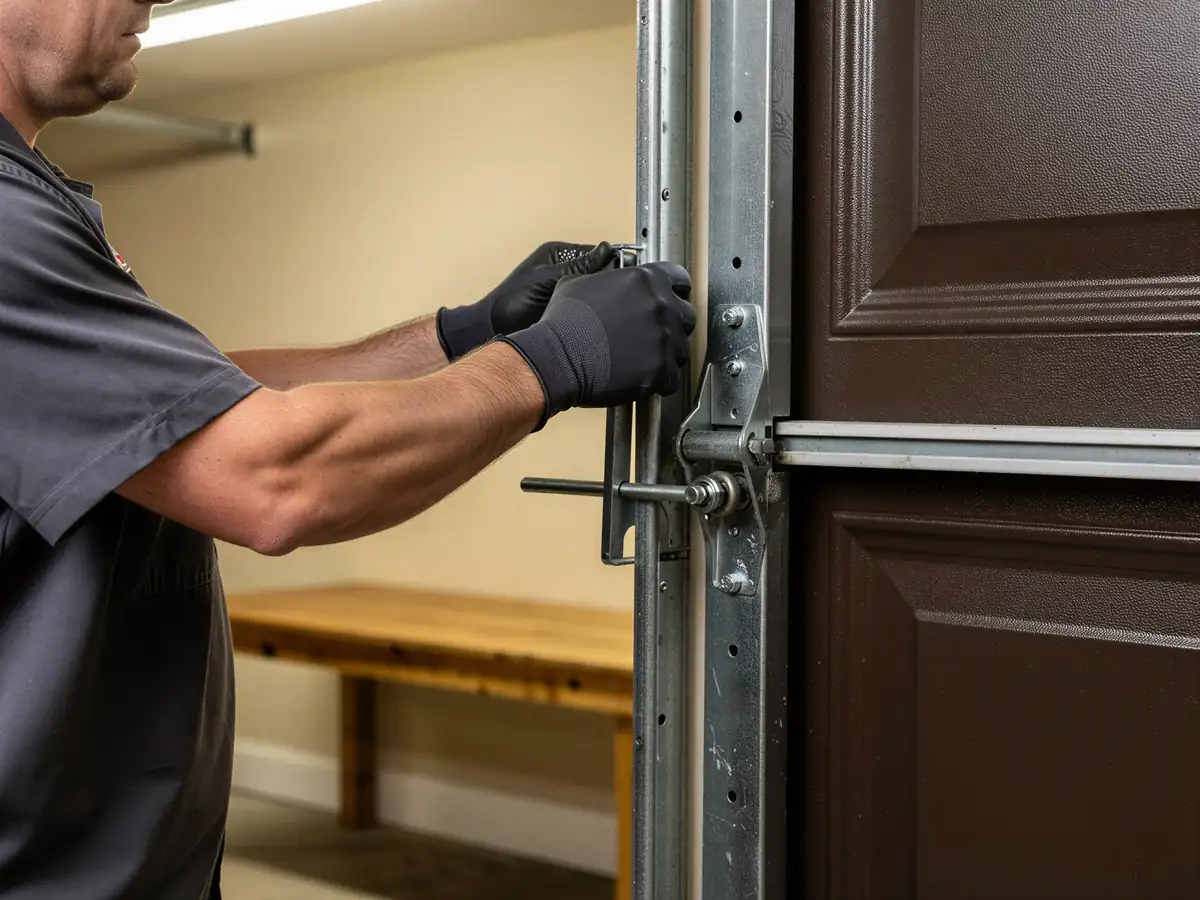
Housing in this service area was mostly built between 1945 and 2000, with the median landing around 1987, so the noise a homeowner hears usually traces back to one of two generations of hardware. Pre-1987 houses are more likely to still have a one-piece or early sectional door on side-mounted torsion hardware - a grinding or scraping sound there often means the roller bracket has worked loose or the spring is unwinding unevenly. Houses from the late 80s and 90s generation, which make up the bulk of the stock across the twenty areas this service covers, tend to run standard galvanized rollers and factory torsion springs. On those, a rhythmic thump usually means a flat spot on a roller; a sharp bang is almost always a spring losing tension or finishing its cycle. A high-pitched squeal on either generation is usually just dry metal on metal - the cheapest problem to have, and the one most people ignore the longest. The sound itself is diagnostic. Grinding is friction somewhere it shouldn't be. Popping is tension releasing. Rattling is something loose. None of it fixes itself, and none of it gets quieter on its own.
What It Costs
We don't publish a flat price list here, because what a noise costs to fix depends on what's actually making it - a roller swap and a spring replacement are not the same job, and a door that's original to a 1987-era house may need parts a newer sectional door doesn't. What we can tell you is what drives the cost up: how long the noise has been ignored, whether the hardware is original to the house, and whether heat-related wear has spread from one part to the parts around it. A squeal caught early is a small job. A squeal ignored for a year, on a door from the 1980s-90s stock that makes up most of this area's housing, often means the roller has already scored the track, which turns a lubrication job into a track-and-roller job. The honest limitation: we can't quote a number over the phone before we've seen the door and heard the noise ourselves. Anyone who does is guessing, and guessing on a torsion spring job is how people get hurt.
Where People Go Wrong
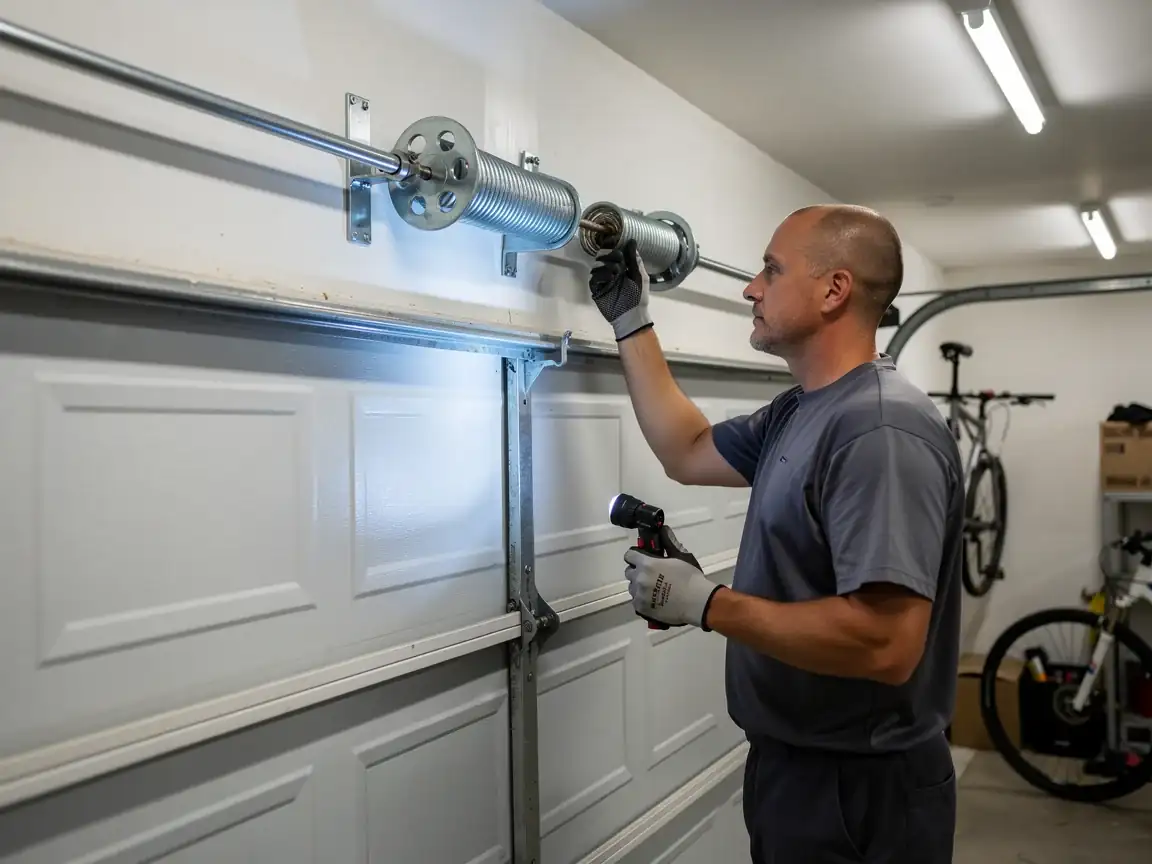
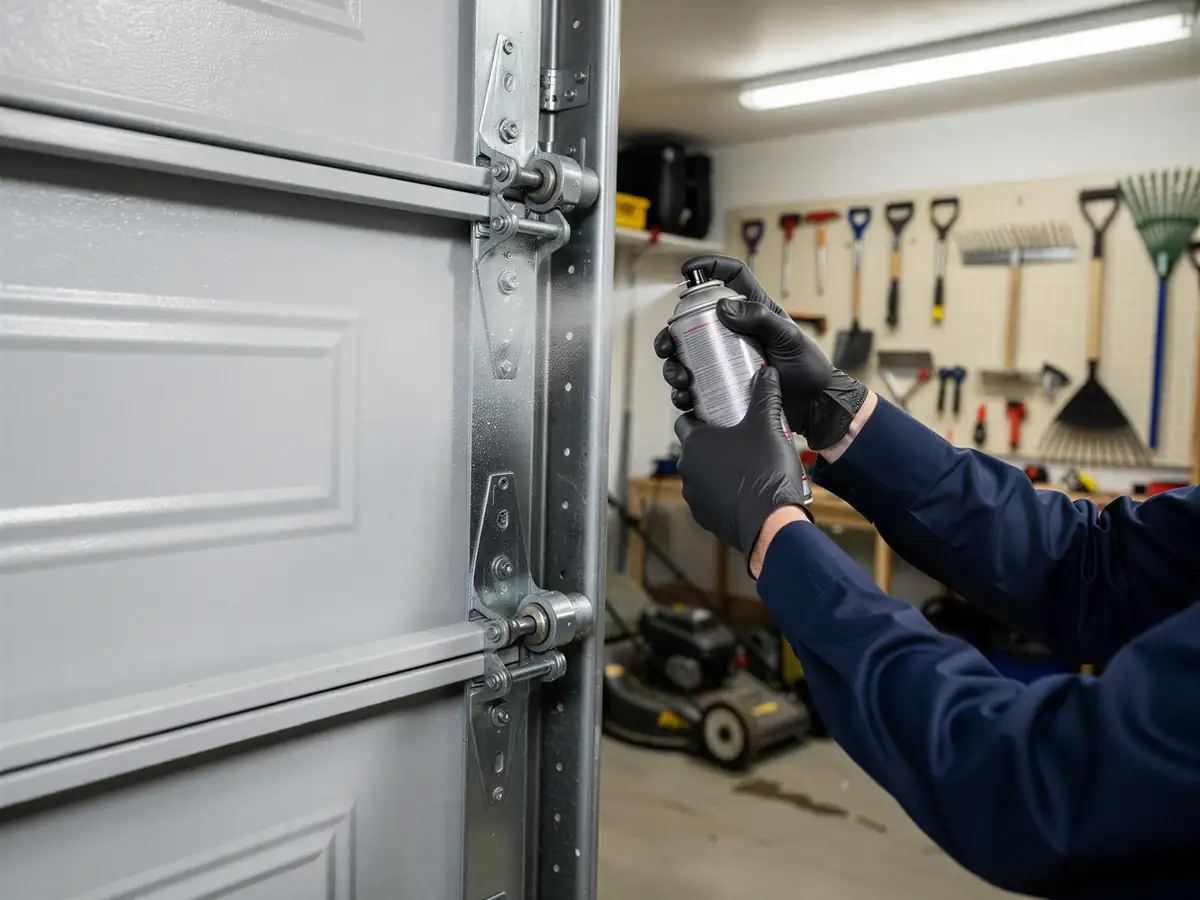
The most common mistake is spraying WD-40 on a noisy door and calling it fixed. WD-40 is a solvent, not a lubricant - it washes out what grease is left on an aging spring or roller and the noise comes back louder within weeks, especially once summer heat burns off what's left of it faster. The second mistake is assuming a quiet fix means a quiet door for good. On hardware that's already pushing past its expected service life - and a lot of it is, given how much of this area's housing dates to 1945-2000 - a sound that goes away after a little oil is often just hiding until the next hot stretch. The third mistake is touching the torsion spring itself. It's under enough tension to cause serious injury, and no noise diagnosis is worth attempting that without the right bars and experience. If a sound is coming from the spring area specifically - a loud bang, then the door won't open - that's a call, not a DIY afternoon. The honest answer for an older door making multiple kinds of noise at once is sometimes that patching it isn't worth it, and replacement makes more sense than chasing the next part that's about to go.
My garage door makes a loud bang and then won't move. What happened?
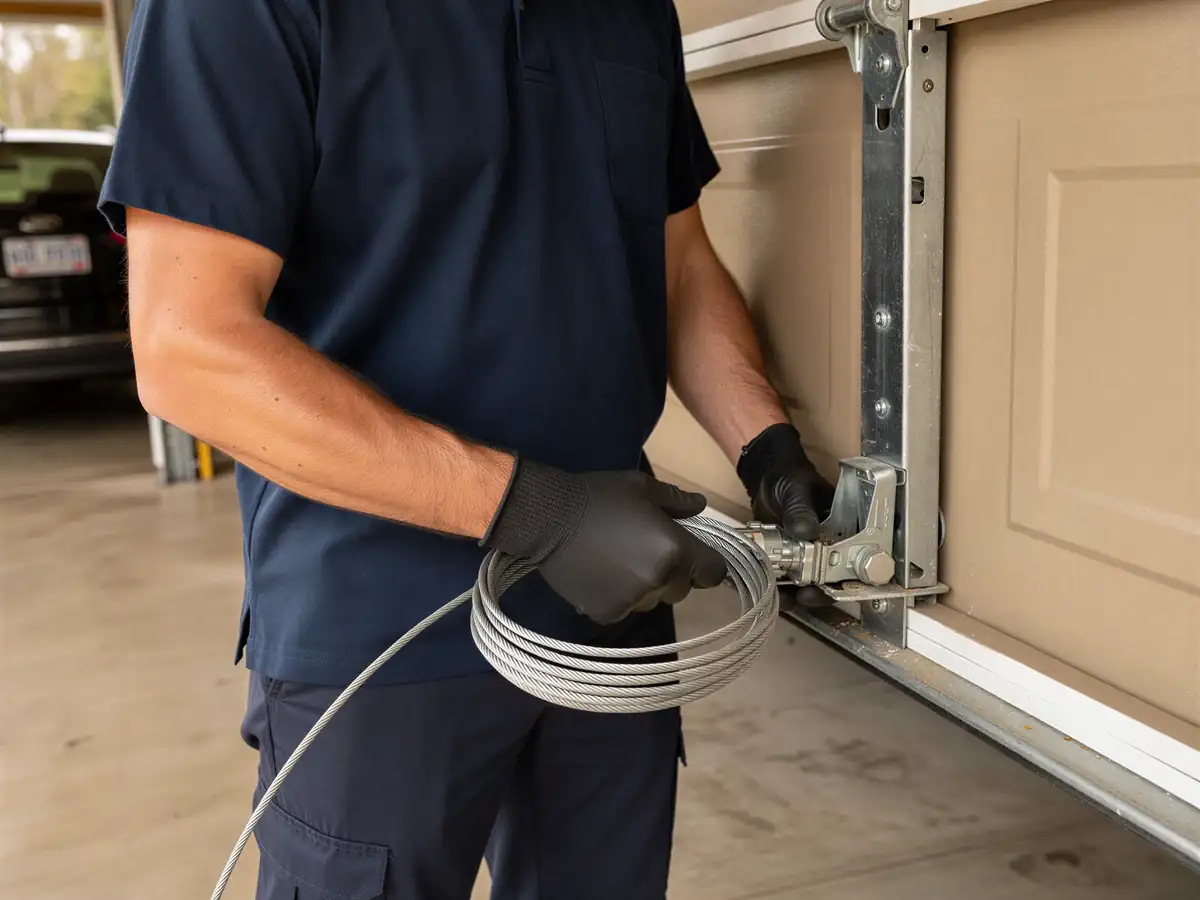
That's almost certainly a broken torsion spring. The bang is the spring snapping or finishing its cycle, and without it the door is too heavy for the opener to lift safely. Don't try to force it open with the opener or by hand - call it in. This is one of the few garage door problems where DIY isn't a reasonable option.
Why does my door squeal more in the summer than the winter?
Heat thins out lubricant and makes metal expand slightly, which changes how rollers sit in the track. In a severe-heat area like this, a door that's quiet most of the year can start squealing in the hottest months even with no new damage - it's the same wear, just more audible.
Is a grinding noise serious?
Usually it means metal is contacting metal somewhere it shouldn't - a roller riding wrong in the track, or a bent section of track itself. It won't fix itself and tends to get worse the longer it runs. It's worth having looked at before it scores the track enough to need replacing.
My house was built in the 1980s. Is my door original?
A lot of houses from that era still have their original rollers, springs, or even the door itself, since most of the housing in this area dates to 1945-2000. Original hardware from that period is well past typical service life, so noise on a door that old deserves more attention than the same noise on a newer one.
Ready to get your garage door sorted?
Tell us what it’s doing and where you are in Modesto - we’ll take it from there.