What the Fix Involves
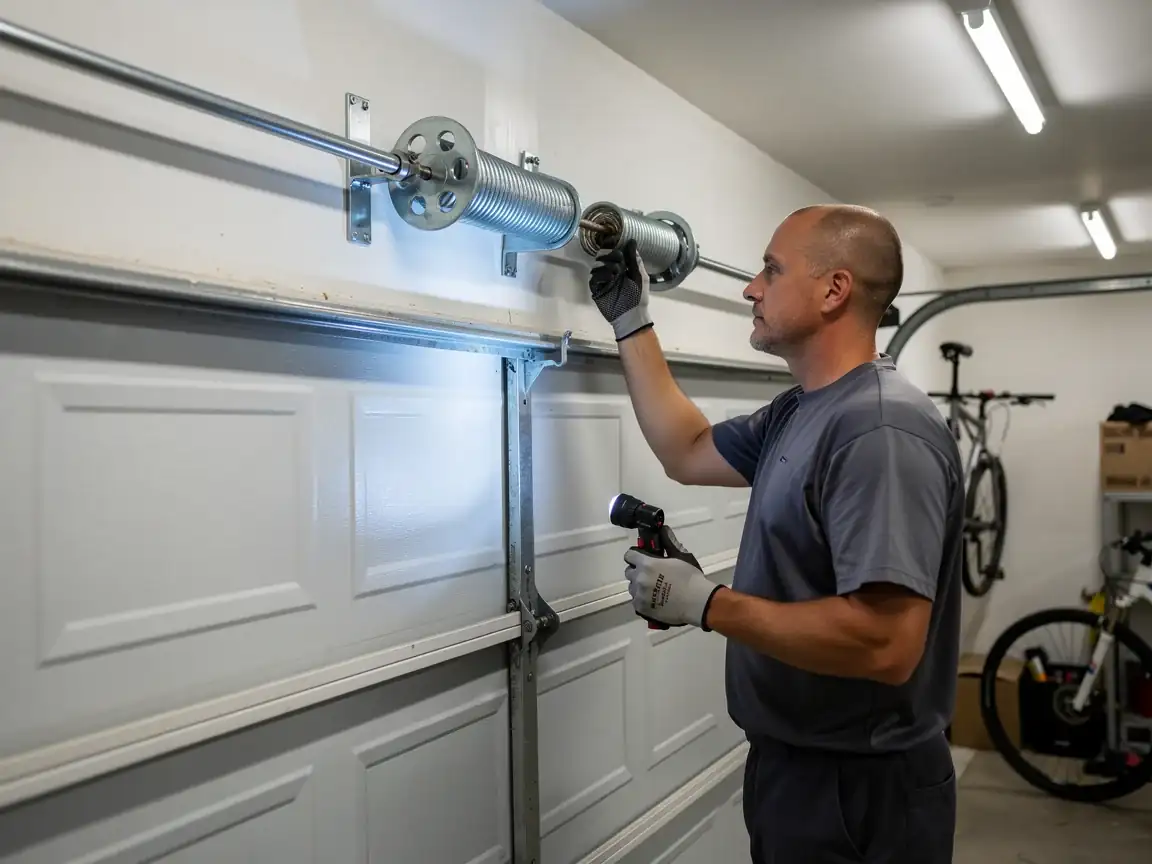
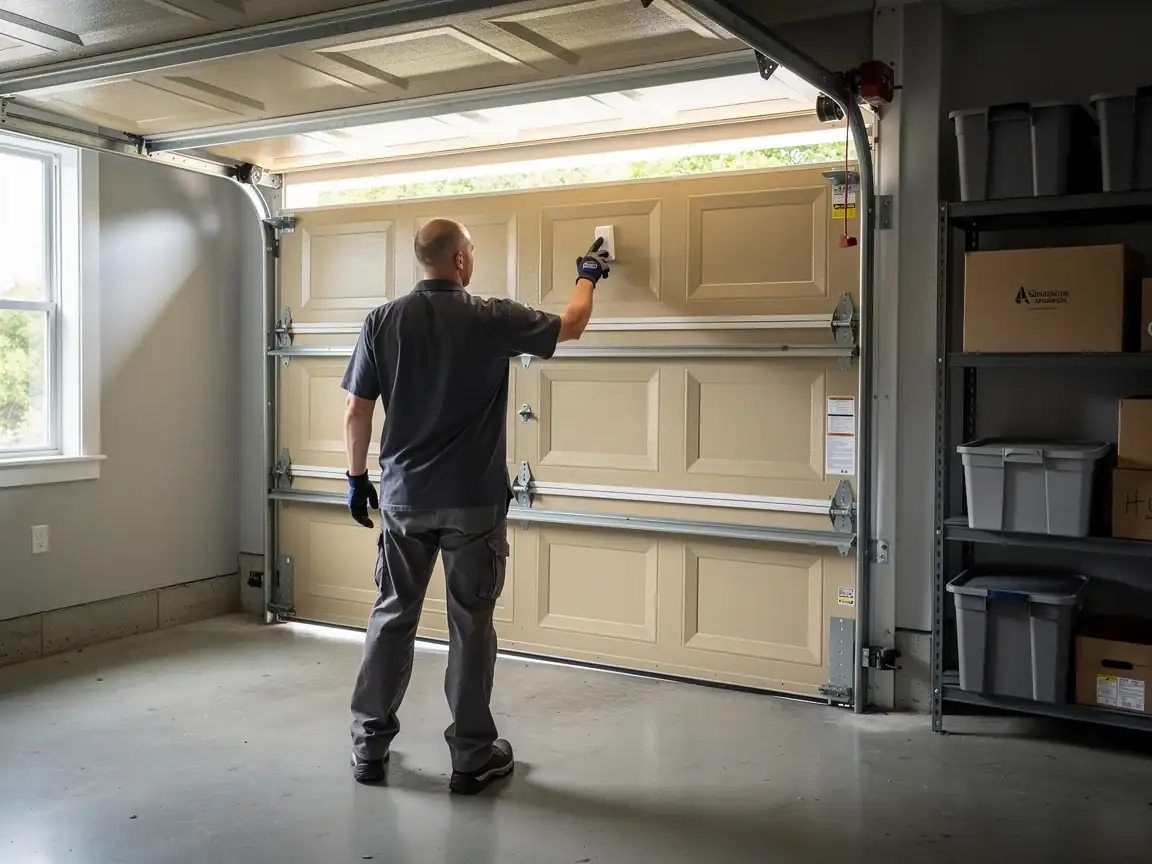
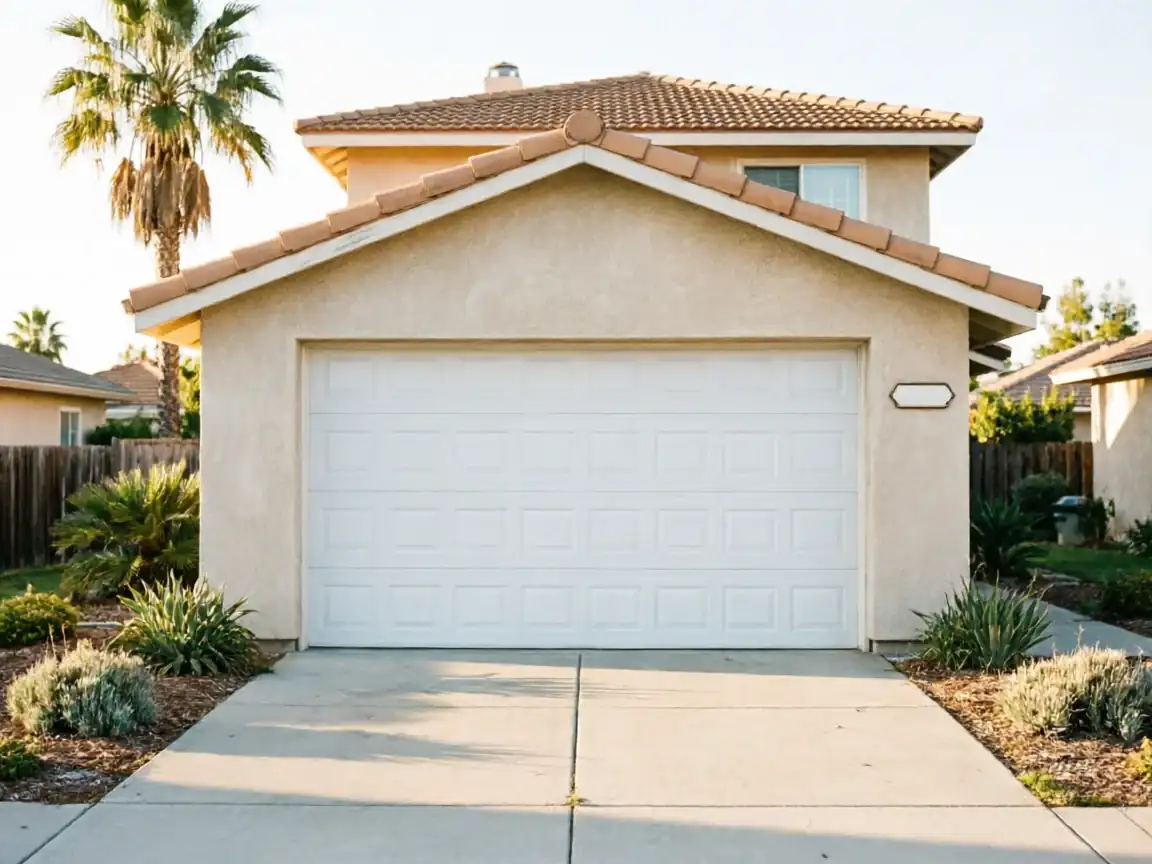
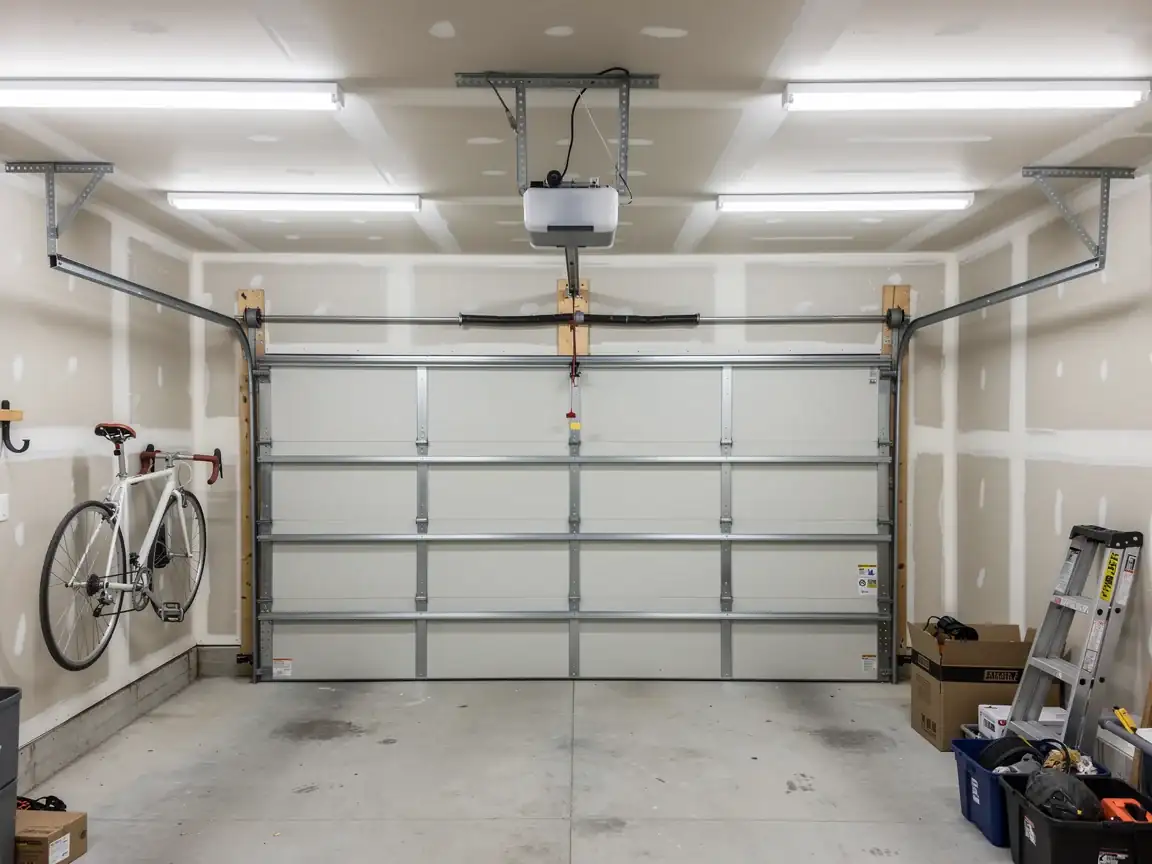
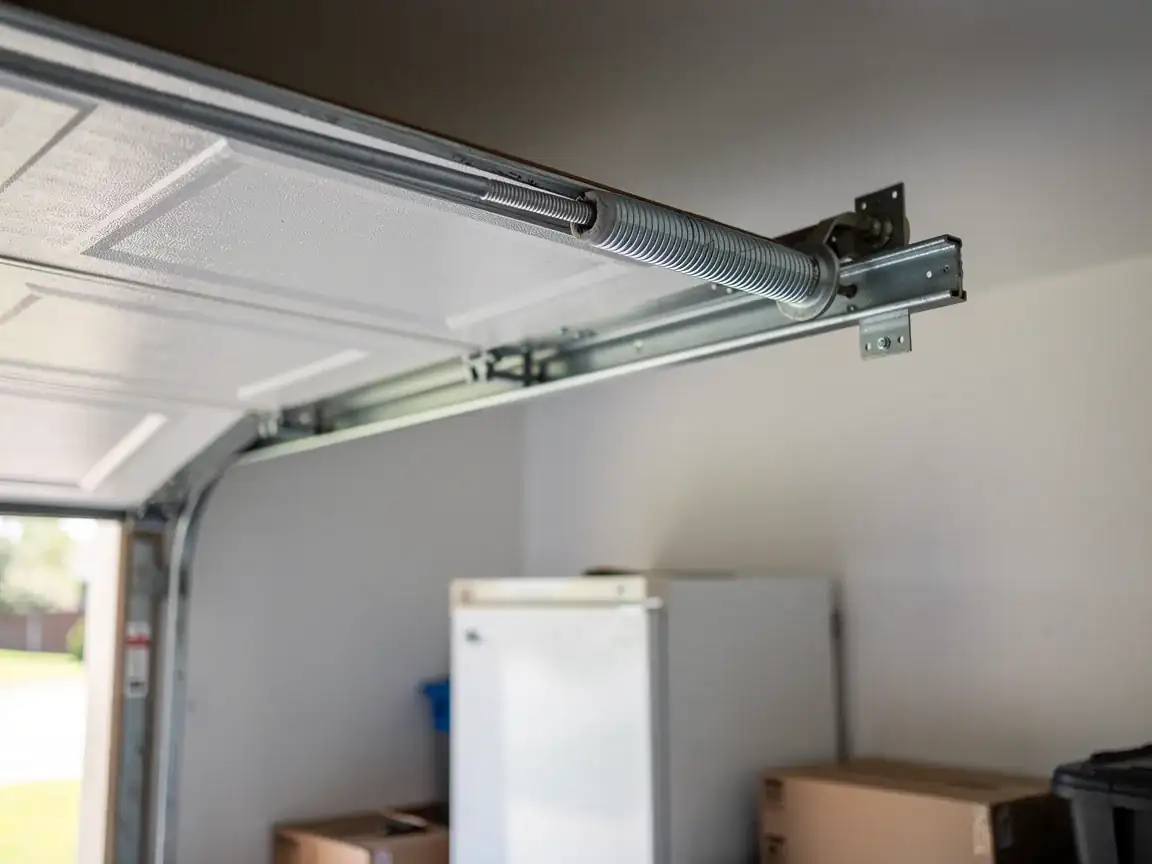
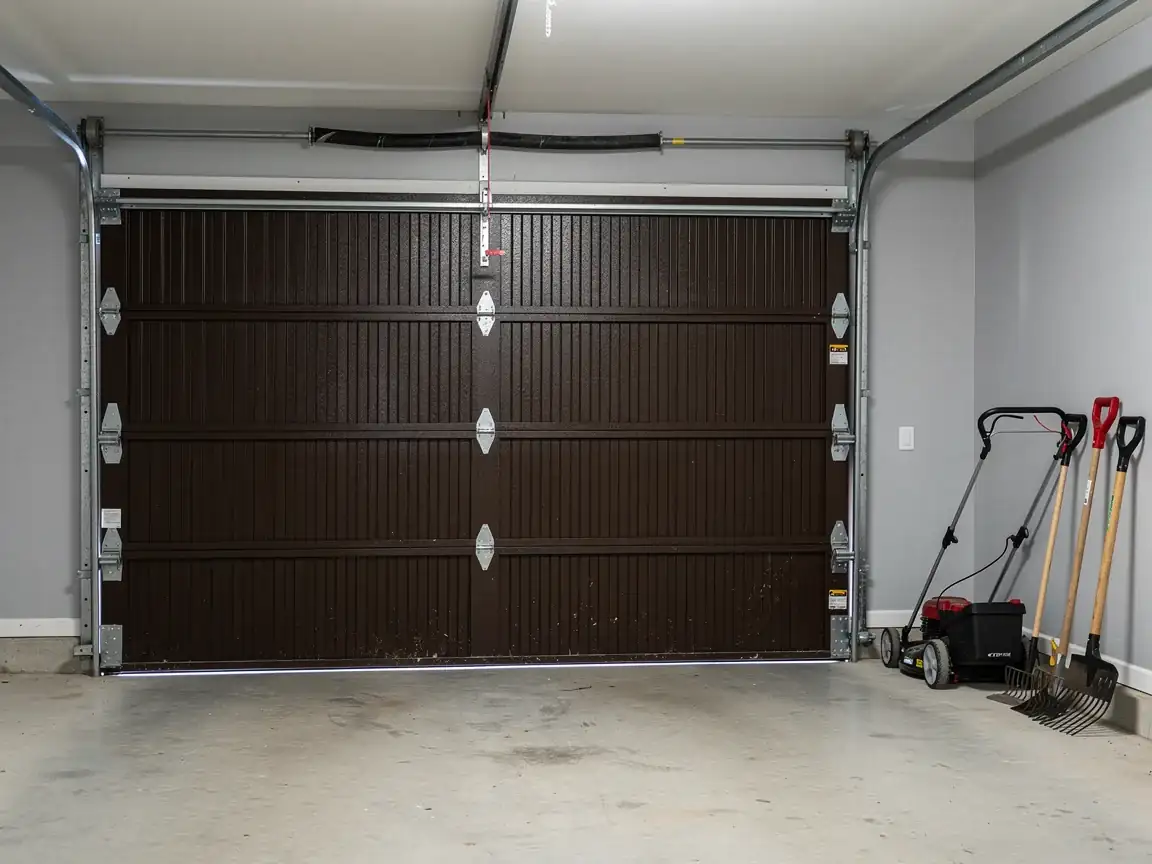
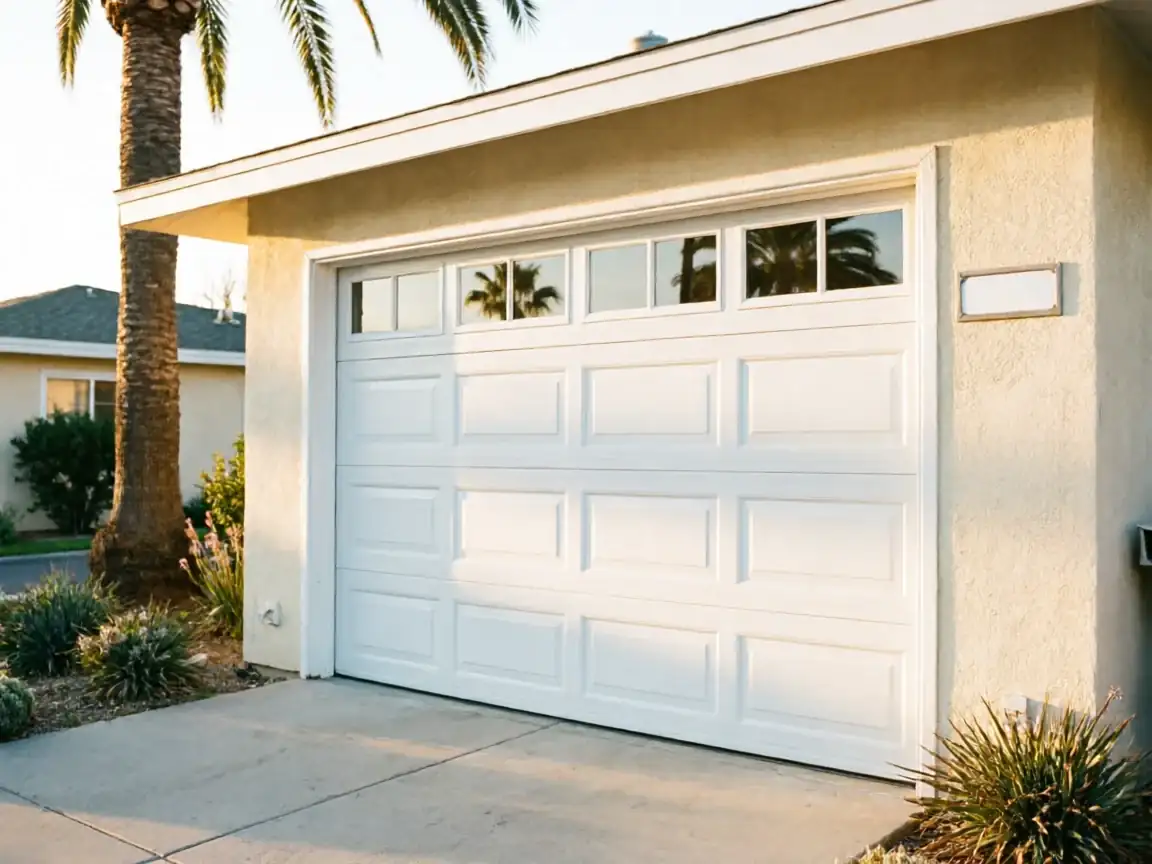
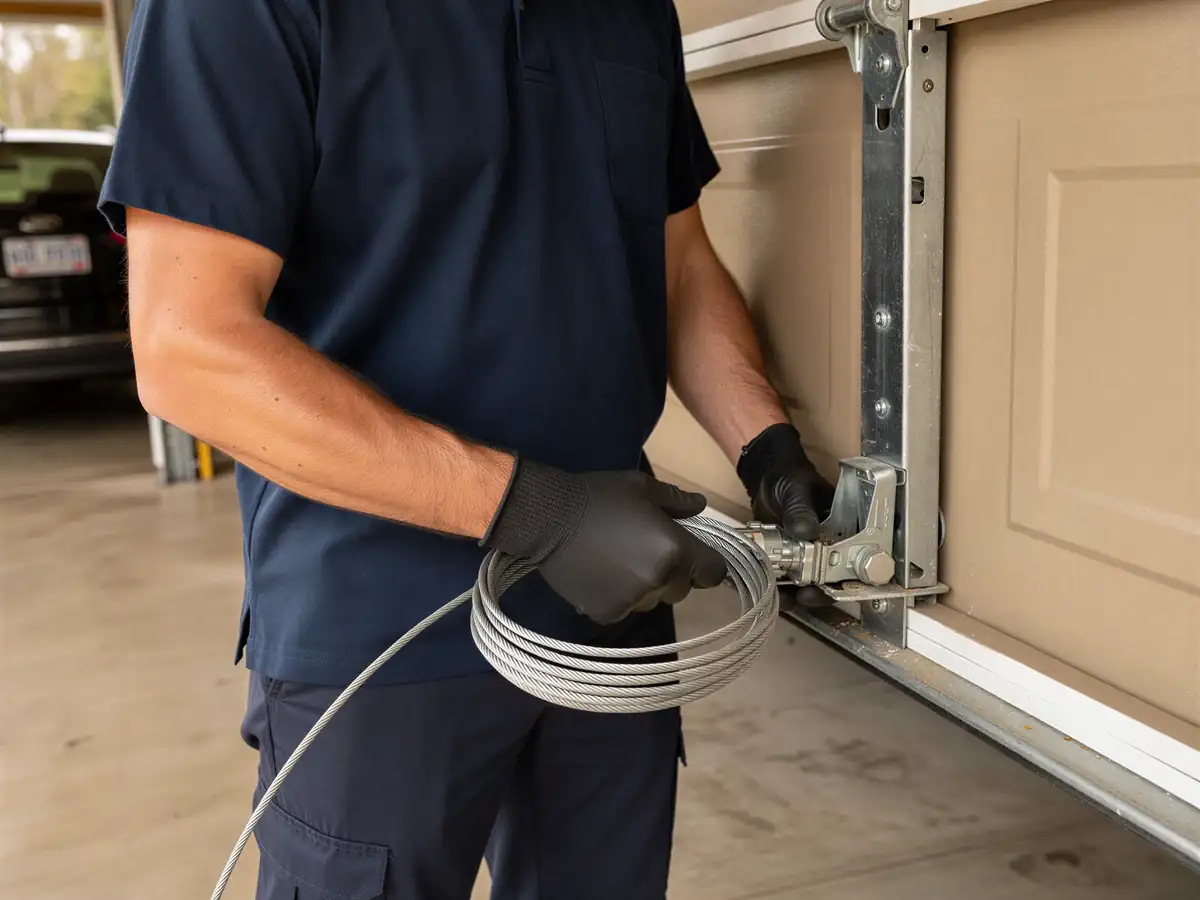
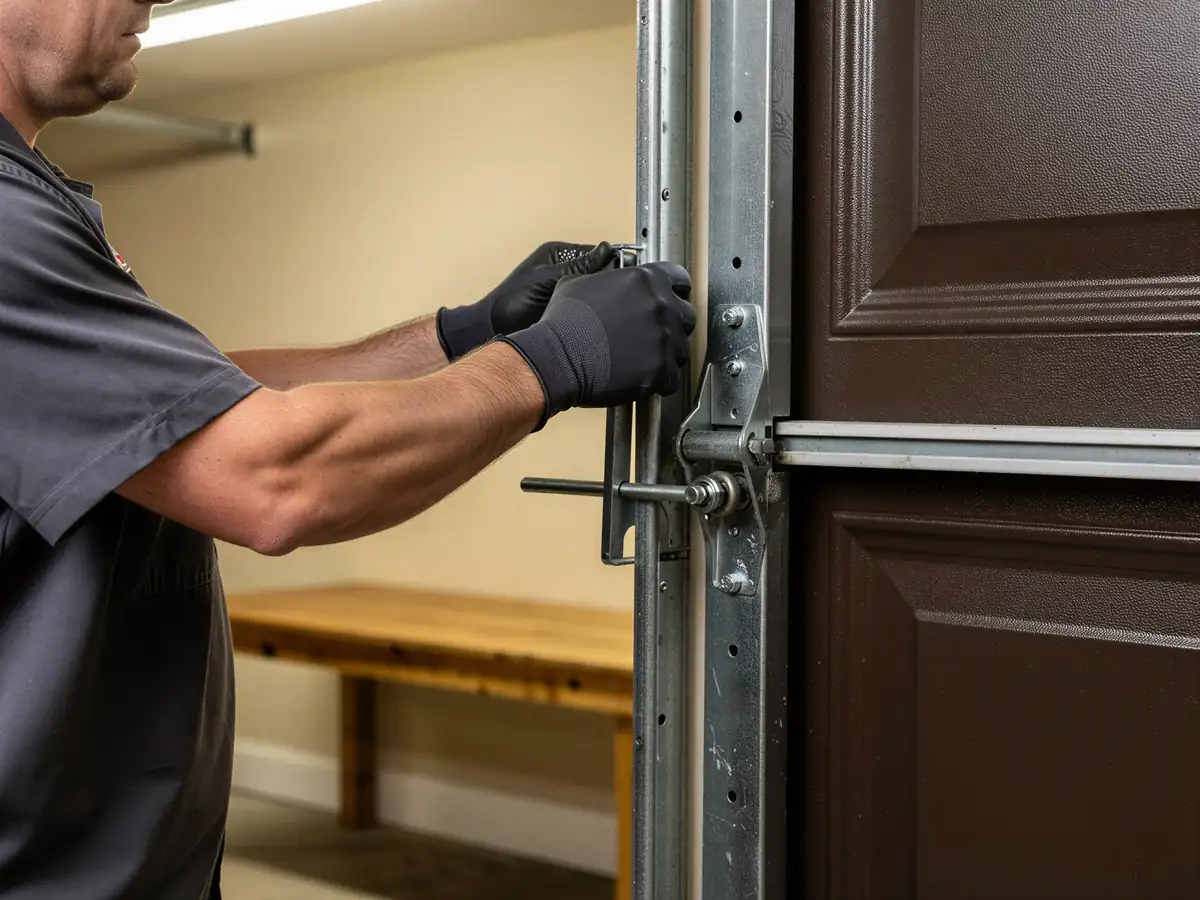
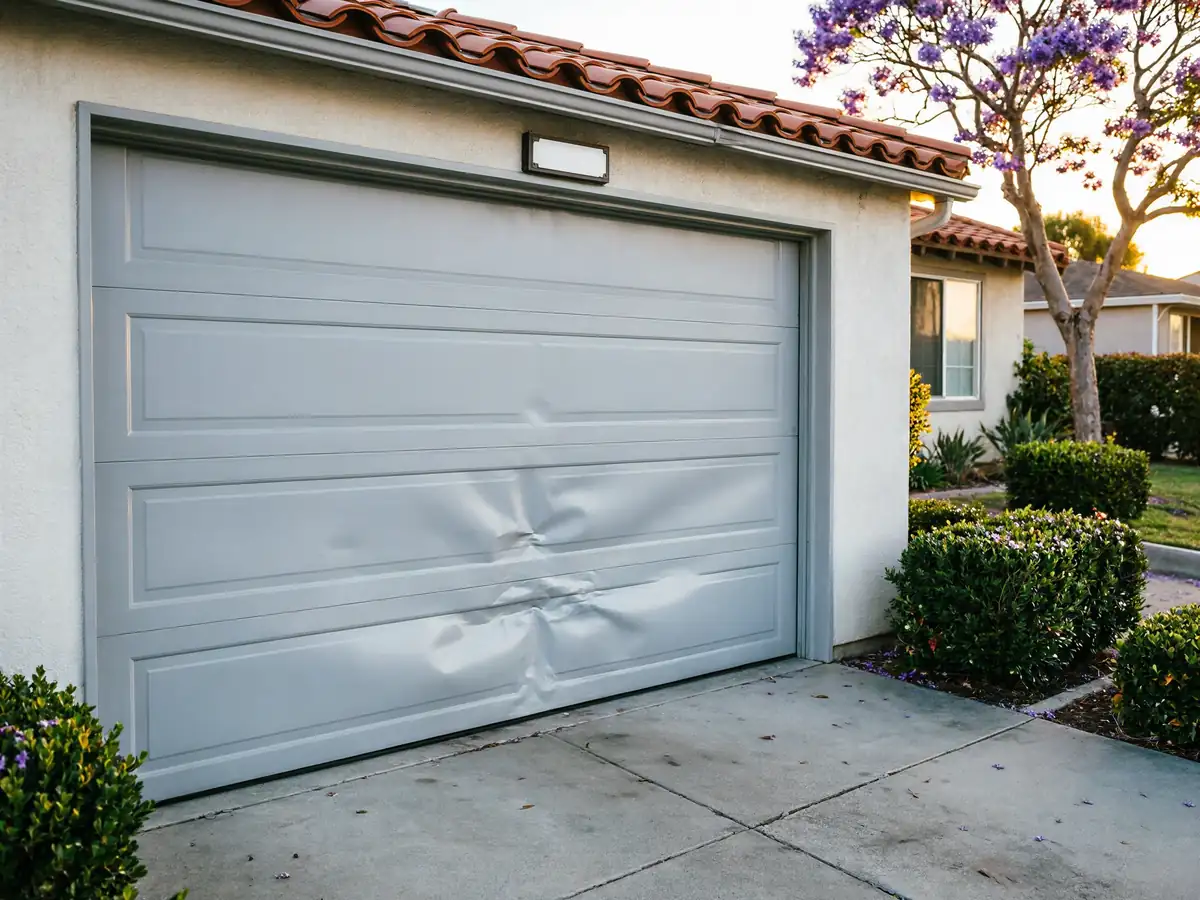
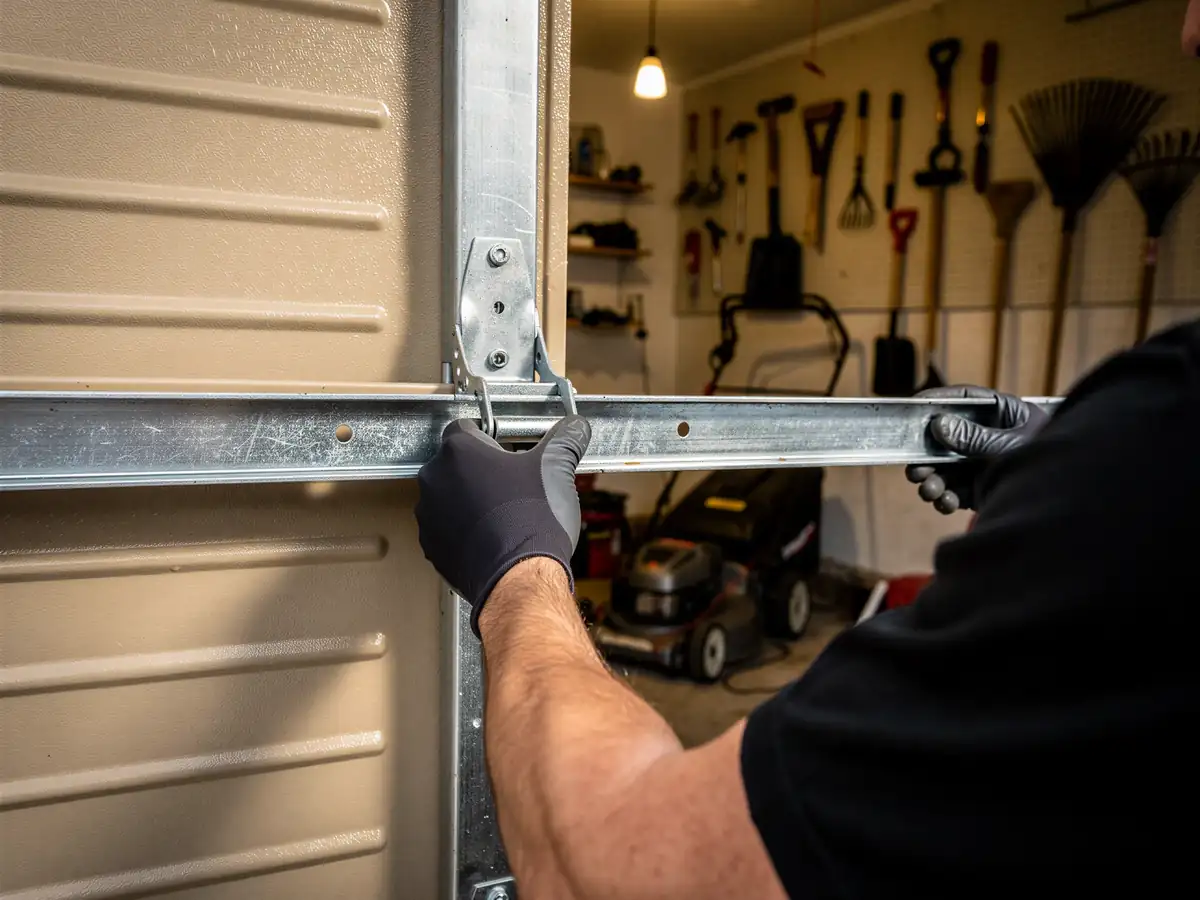
On a door built around 2000, the torsion spring is almost always sized for a wider, heavier panel than what you'd find on an older single-car garage. If the spring snapped, we're matching the wind and wire gauge to that load, not swapping in whatever's on the truck. Houses in Patterson's heat exposure also mean the foam-backed steel panels expand and flex more over a summer than the thinner, uninsulated panels built before the 1990s, and that movement loosens hinges and works screws free at the track brackets faster than you'd expect on a newer door. We check the track alignment, the roller condition, and the opener's force settings together, because on a wider double door, one bent track section throws off the whole panel's travel in a way it wouldn't on a narrower single door. If the opener itself is original to a house built close to 2000, we're also looking at whether the drive gear or logic board is the actual point of failure, not just the door hardware.
The DIY Question
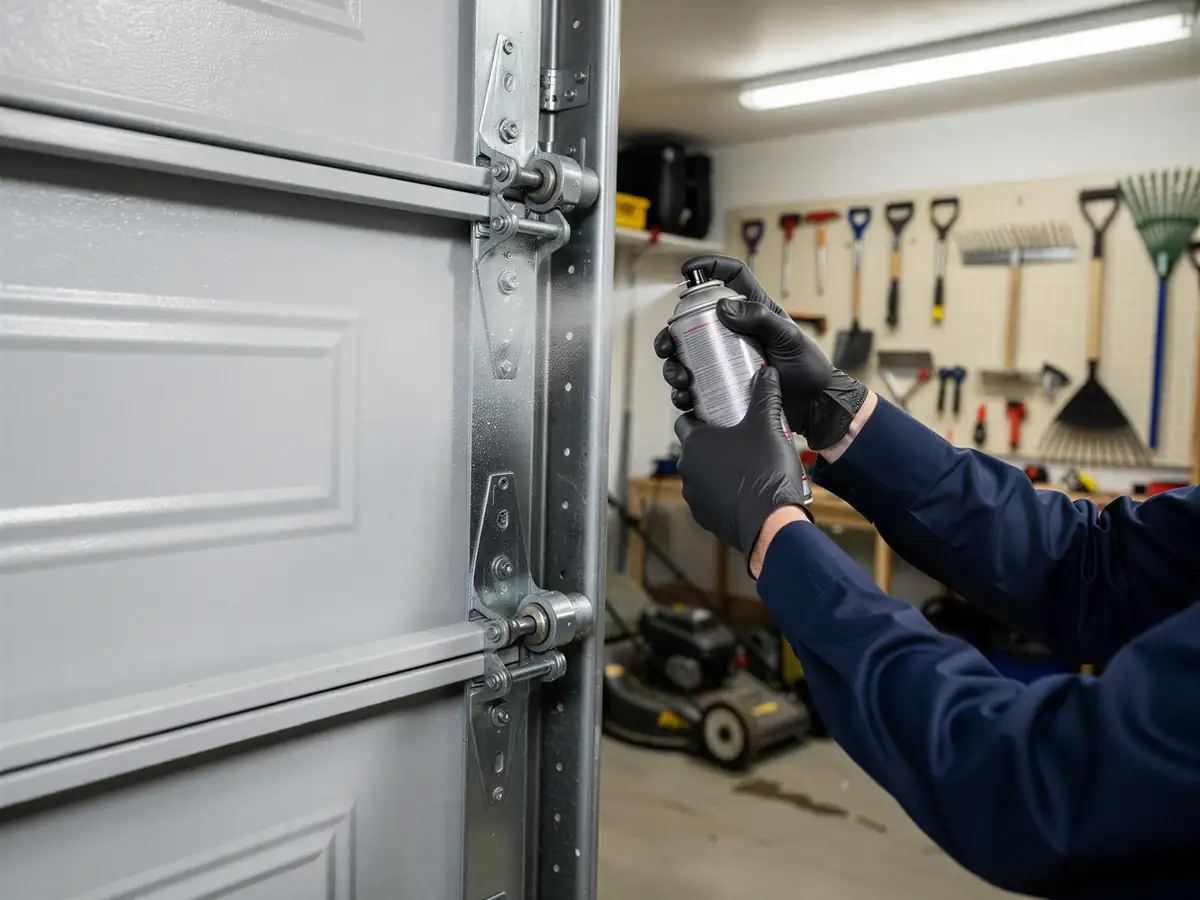
A sagging panel or a noisy roller is something a lot of owners want to handle themselves, and some of it is fine to try - tightening a loose track bracket or lubricating hinges isn't going to hurt anything. A broken torsion spring on a door this wide is a different matter. The spring on a double-car insulated door is wound under enough tension to cause real injury if it lets go while you're working on it, and getting the wind count wrong on a replacement spring means the door either won't lift the panel's actual weight or slams down too fast. We'll also say plainly: we don't stock every spring size and gauge on the truck for every call, so if your door uses an less common size, there can be a short wait on parts. That's a real limitation, not a sales pitch - it's worth knowing before you schedule.